From the Desk of Camaro West

As we usher in spring and the season of renewal, I want to share some transitions happening at Peace is Loud in the coming months. 

Last year we made the difficult decision to sunset our Speakers Bureau, one of Peace is Loud’s founding programs. As this transition unfolds, we will continue representing speakers through June 2026.

We hold so much gratitude for the 28 speakers, program staff, countless partners and hosts around the world who made the work of the Bureau possible over the years. Together we were able to support an incredible community of activists and storytellers, negotiating their compensation and terms to ensure their messages reached the right audiences while their needs, values and well-being were prioritized. 

Our commitment to storytelling for social change endures, and as a result of this transition we are sharpening our focus on documentary film impact work. Moving forward we are concentrating our resources on meeting the needs of filmmakers in this ever-changing landscape, and look forward to sharing what’s on the horizon for that work in the future.

Our Impact Campaign Spotlight this quarter outlines our work on the theatrical release of Cherien Dabis’ All That’s Left of You. Read on to learn more about our impact work and how to host a community screening of this powerful film.

With care,
Camaro West, Executive Director

Impact Campaign Spotlight: All That’s Left of You
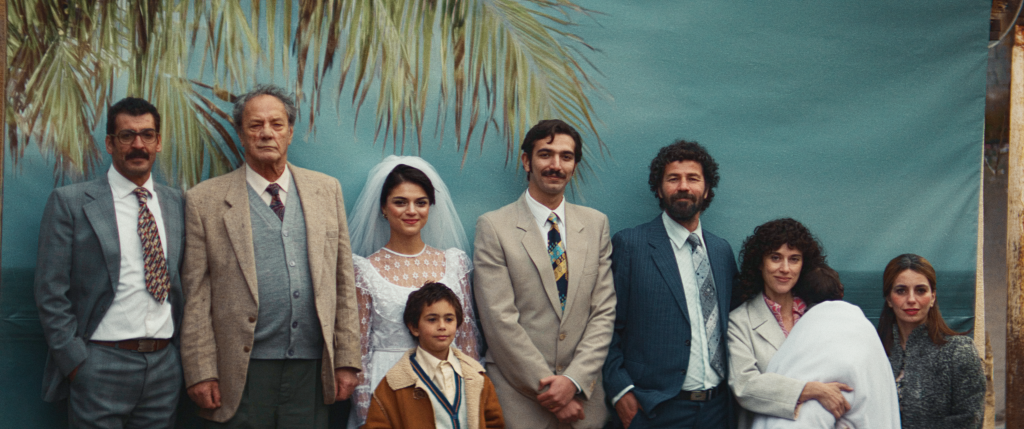
Image: Film still from All That’s Left of You

Throughout January and February, All That’s Left of You played in more than 100 theaters, reaching audiences across the US and Canada. 

We distributed more than 1,000 complimentary tickets to students and organizers in 41 cities, while working with nearly 100 grassroots organizations, nonprofits, and student groups to uplift both the film and the work happening in their communities.

Highlights of our impact efforts:

  • A virtual conversation with All That’s Left of You executive producer Stephanie Nadi Olson and UNRWA USA Executive Director Mara Kronenfeld
  • An live discussion between the director of Traces of Home, Colette Ghunim and Cherien Dabis 
  • An in-person Q&A with CAIR California CEO Hussam Ayloush and All That’s Left of You executive producer Mohannad Malas
  • Secured press:

Host a Community Screening of All That’s Left of You

Now, you can join us in amplifying this work by hosting your own community screening of All That’s Left of YouClick here to learn more.

Masterclass and Workshop Series: Peace is Loud x Impacta Cine

This Spring, we are partnering with Impacte Cine to offer two Spanish-language virtual opportunities for documentary storytellers, impact producers, and activists. 

Masterclass: April 14th 

Two-hour masterclass overviewing Peace is Loud’s participant care framework and Impacta Cine’s acompañamiento practice rooted in activism. Participants will have a chance to apply to the limited workshop detailed below.

Register for the Masterclass here.

Limited Workshop Series: May 12th, 19th, 26th, and June 2nd

A limited workshop series integrating deeper learning and skill-building, presentations from both organizations, community-building, case studies, guest speakers and more.

Festivals and Awards

We’re celebrating a season of well-deserved recognition for filmmakers and activists we know and love. These nominations and wins honor bold storytelling, powerful advocacy, and highlight the communities working to be seen and heard.

SIMA Award

Special Mention: Merle Iliná (Impacte Cine) and Magali Rocha Donnadieu for Volverte A Ver / To See You Again

Sundance Film Festival

Short Film Jury Award: Arielle C. Knight for The Boys and the Bees

Big Sky Documentary Film Festival

World Premiere and Best Feature Winner: Caron Creighton for Wood Street

Screening: Arielle Knight for Boys and the Bees

Screening: Brydie O’ Connor for Barbara Forever 

The Roaming Center for Magnetic Alternatives

Screening: Vaishali Sinha for Give it a Shot!

Colette Ghunim for Traces of Home

SXSW 2026

World Premiere: Dano Garcia for Mickey Link

Academy Awards

Short List for Best International Feature Film: Cherien Dabis for All That’s Left of You

International Spirit Awards

Nomination: Cherien Dabis for All That’s Left of You

More News and Resources

Care in Practice

Shine a Light – A Filmmakers’s Guide to Creating a Duty of Care Plan is a new resource in the Collective Lens Library made in collaboration with the Documentary Participants’ Empowerment Alliance and Margie Ratliff. Click here to view and download.

From the Community

A new case study was published from Distribution Advocates reflects on the impact and importance of film festival support and on-the-ground marketing. Read the case study, The Ivory Tower and the Pulpit: ‘Vengo volviendo’ 10 Years Later, on their Substack.
In this behind-the-scenes conversation, Peace is Loud’s Stephanie Palumbo and Florencia Varela discuss piloting a first-of-its-kind Post/Impact Residency with UFO centering care, imagination, and strategy in the documentary post-production process.

Peace is Loud: What inspired the creation of the Post/Impact Residency, and why was now the right time to launch it?

Florencia Varela: The origin of the program was a serendipitous function of having collaborated with Untitled Filmmaker Org (UFO) before, UFO having the infrastructure for a residency program in place, and Peace is Loud being invested in building innovative impact learning spaces for filmmakers. The specific launch date of the program was very much tied to the availability of the venue, which helped catalyze the program’s planning.

Peace is Loud: How did the collaboration with UFO evolve, and what made them the right partner?

Florencia Varela: UFO has been a partner of Peace is Loud for over a year and a half now, through our Collective Lens program. When they approached us with the idea to build a residency, they offered us the opportunity to be imaginative together and ask what it could mean to create protected space for impact planning. UFO brought immense value, from their previous experience delivering film residencies and access to a venue, to their commitment to a more equitable film ecosystem. When we learned about Wood Street, a film about an unhoused community trying to protect each other from eviction, and met with filmmakers Caron Creighton and Estevan Padilla, it ticked all the boxes.

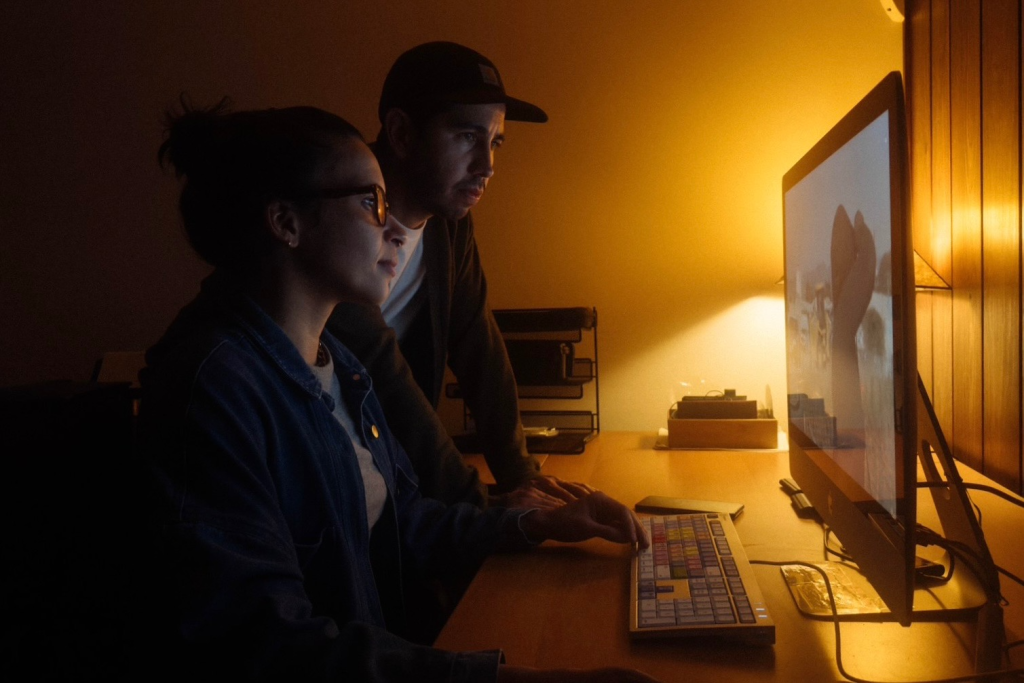
Filmmakers Estevan Padilla and Caron Creighton sit in front of a computer reviewing footage.
Filmmakers Estevan Padilla and Caron Creighton review film footage at the Peace is Loud x UFO Post/Impact Residency

Peace is Loud: Say more about the boxes Wood Street ticked. Why was this an ideal film for the impact residency?

Stephanie Palumbo: We really believe in the power of Wood Street, especially in this moment when encampment sweeps are threatening unhoused communities. This film is perfectly poised to be a catalyst for change and we felt strongly about its artistic merit and also the values and vision of the filmmakers.

Peace is Loud: What sets this residency apart from other film residencies?

Stephanie Palumbo: To our knowledge, there’s no other in-person documentary residency program where filmmakers get dedicated time, space, and strategic support specifically around impact work. Often filmmakers think of impact as a discrete, time-limited campaign, but we see it as ongoing and holistic work. Our residency allows impact to become a crucial part of the creative process.

Florencia Varela: This residency is the first of its kind that we know of. While many residencies are dedicated to films in development, and some impact programs exist virtually, we offered protected time and space to work on both the film and the impact strategy. The fact that we included financial, unrestricted support was also key. Fundraising for participant care work can be particularly difficult.

“Often filmmakers think of impact as a discrete, time-limited campaign, but we see it as ongoing and holistic work. Our residency allows impact to become a crucial part of the creative process.”

Peace is Loud: How did the residency integrate post-production and impact work?

Stephanie Palumbo: Our partners at UFO provided a house with an editing suite for a month. We also brought in an editorial consultant, Rabab Haj Yahya, to view their cut and work with them in person. Flo and I met with the filmmakers to offer our Collective Lens impact frameworks, ask strategic questions, and identify impact and participant care next steps based on the deep knowledge and values Caron and Estevan shared. We also created impact principles and wrote fundraising materials by echoing back their own reflections. Everything is a draft that they can further edit and customize, but we hope it helps minimize the time and labor they’d otherwise spend on this while still finishing their film.

Florencia Varela: The core of the impact work was to create space for reflection and intentional questions around vision and care. Caron and Estevan were able to advance Wood Street from assembly to a rough cut, which is an immense achievement, using their impact principles as a decision-making lens in the edit. We were so energized by how much they shared with us.

Peace is Loud: How did you center care throughout the residency?

Stephanie Palumbo: We let the process be largely informed by the filmmakers’ needs, everything from deliverables to meeting schedules was determined through conversations with them. It was adaptable and responsive.Florencia Varela: An important aspect was financial accessibility. In addition to providing a $10,000 unrestricted grant, we made sure the program included stipends to help offset income or work disruptions, and we covered travel.

The film team stand in a row facing the camera with blue-gray sky and trees in the background.
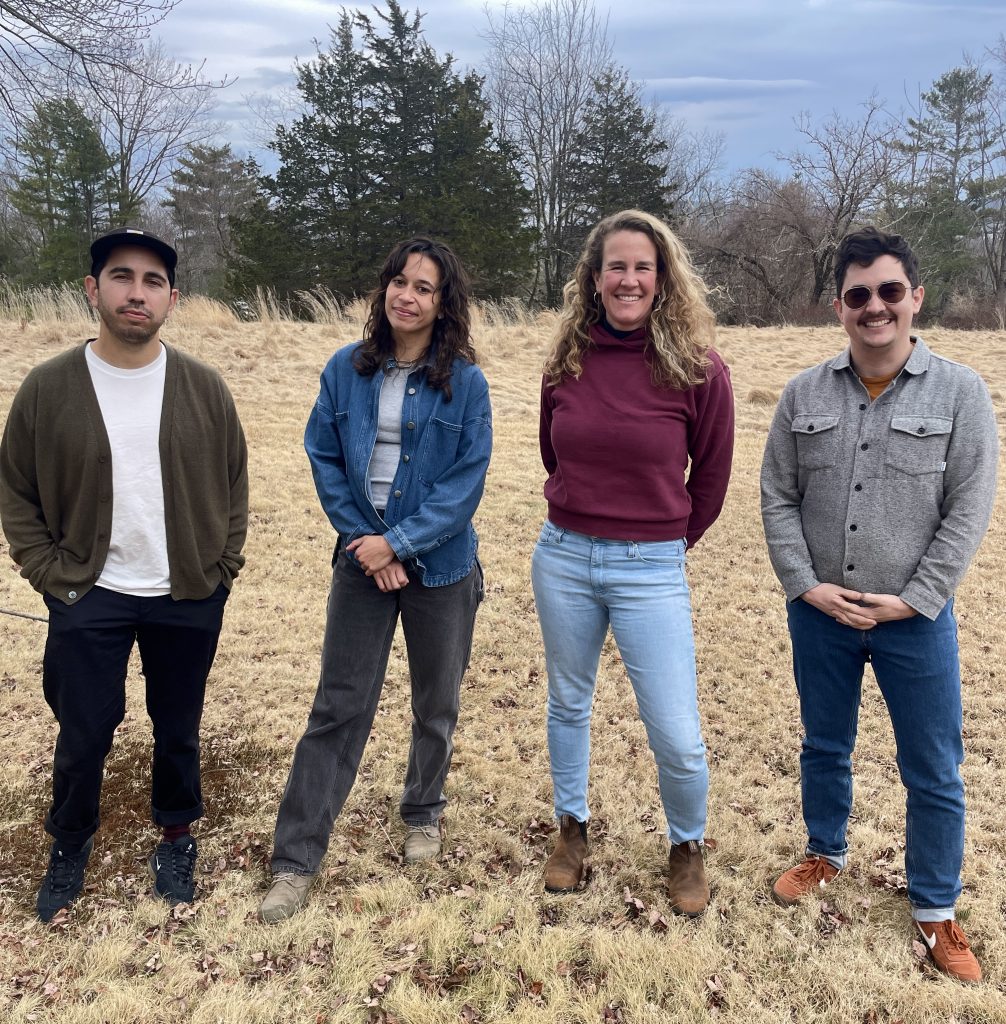
From Left: Estevan Padilla (filmmaker), Caron Creighton (filmmaker), Martha Gregory (UFO), Arno Mokros (UFO)

Peace is Loud: What specific needs did the residency seek to address?

Florencia Varela: Everything was rooted in Caron and Estevan’s vision and values. They advanced their project significantly, and it was exciting to be thought partners for the work.

Peace is Loud: What did you learn from this pilot that surprised or moved you?

Florencia Varela: A learning that I always love is that taking measured risks can be very rewarding. We are so grateful that this was an experiment we could embark on with UFO. Spending that much time in a learning space with a film team gave the program a depth that felt very right.

Stephanie Palumbo: I was very moved by the responses from applicants who expressed gratitude for this type of model. It makes me wonder how more organizations could provide deeper impact support like this. 

Peace is Loud: Looking ahead, how do you see this residency evolving?

Florencia Varela: Given our experience with the pilot, I hope we can continue growing innovative learning spaces like the Post/Impact Residency, and keep building expansive (and financial!) support for values-aligned filmmakers. Ultimately, we want to help shift the industry so that impact and care are never afterthoughts.

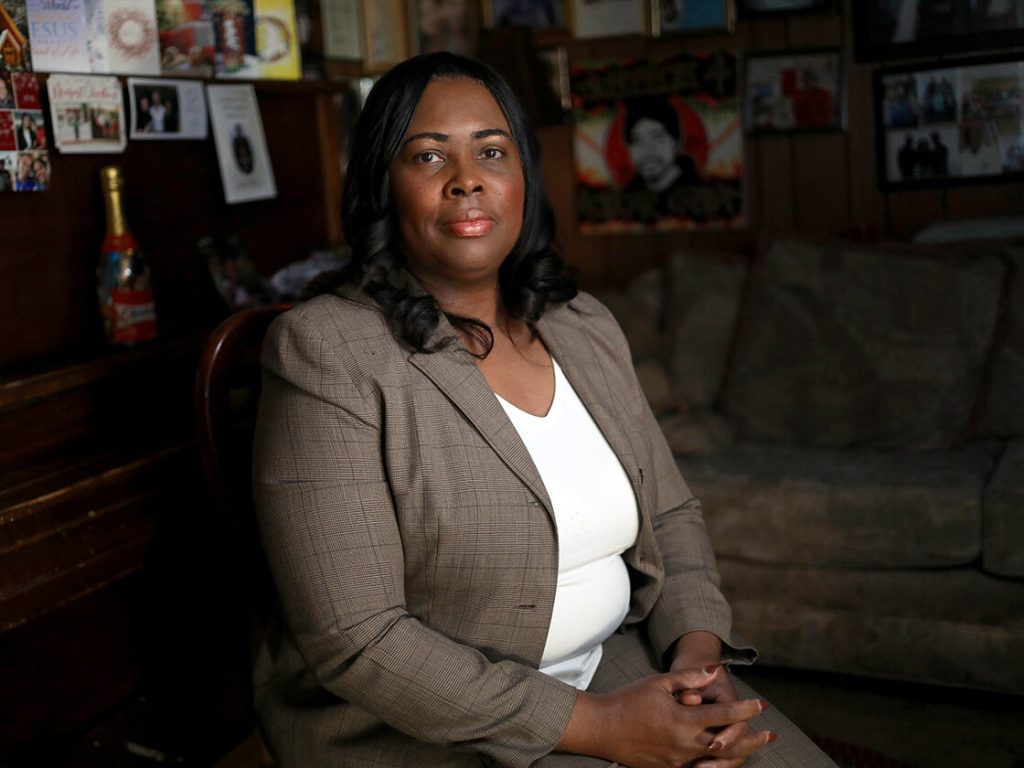
In her timely Op-Ed, Reverend Wanda Johnson reflects on the enduring vision of Dr. Martin Luther King Jr.’s “Beloved Community” and its relevance in today’s fight against systemic racism and police violence.

By Reverend Wanda Johnson

photo courtesy of the Oscar Grant Foundation

When I gather with other Black mothers who’ve lost their children to police brutality, the room is heavy with grief—but also alive with purpose. In sharing our pain, stories, and determination, we’ve found solace and strength—a strength that transforms loss into action and builds something bigger than ourselves: community, healing, and hope.

As Martin Luther King Jr. Day approaches, we reflect on his vision of a “Beloved Community”—a world where justice, equality, and love prevail. For mothers like us, who have endured the crushing weight of systemic racism and state violence, that vision often feels heartbreakingly out of reach.

This year, the day carries even sharper resonance as the nation observes Martin Luther King Jr. Day alongside the inauguration of a president whose legacy starkly contrasts with Dr. King’s dream. The juxtaposition reminds us of how far we still have to go, but it also fuels our resolve to push forward.

Dr. King’s belief that “true peace is not merely the absence of tension; it is the presence of justice” underpins our work. Through mutual aid, community support, and healing practices, we are not waiting for justice to arrive—we are building it ourselves.

Dr. King’s vision of the Beloved Community was not just an aspirational dream; it was a practical blueprint for dismantling systemic oppression by addressing its roots—poverty, racism, and violence. He called for nonviolence and organized resistance to create systems rooted in equity and humanity.

As mothers who have lost our children to police violence, we see our work as a continuation of his legacy. Dr. King understood that state violence against one person is violence against the collective soul of a community. He called on us to confront these injustices with radical love and unyielding action.

The work highlighted in our For Our Children documentary reflects these principles. We organize mutual aid networks, create spaces for collective healing, and fight for policy change—not out of vengeance, but to ensure no other mother endures what we have. These efforts embody Dr. King’s dream: justice achieved through love, and transformation born from collective power.

When my son, Oscar Grant, was killed by a police officer in 2009, I entered a nightmare I had long feared. Oscar was unarmed, lying face down when he was shot. His death was a devastating reminder of how systemic racism devalues Black lives, turning routine encounters into fatal ones. Tragically, my story is not unique. Black Americans are more than twice as likely as White Americans to be killed by police. Despite years of protests and promises of reform, systemic racism persists.

The Trump administration dismantled oversight mechanisms such as consent decrees designed to monitor police departments with histories of misconduct, promoted divisive rhetoric that emboldened white supremacy, and weakened policies meant to protect communities of color, including rolling back fair housing protections and limiting the scope of civil rights investigations.

The toll is immense. Families like mine bear the emotional weight of grief with little support. Communities are left fractured, trapped in cycles of mistrust and trauma. These are not isolated incidents but symptoms of systems built to perpetuate inequality. The cost is measured in lives lost, dreams deferred, and justice denied.

After losing my son, I realized healing couldn’t happen in isolation. I joined other mothers to create spaces where we could grieve and rebuild together.

Our healing retreats offer sacred spaces to share our stories, practice self-care, and build the resilience needed to keep fighting. Advocacy workshops teach families to navigate legal systems, speak to the media, and mobilize their communities. Mutual aid programs provide resources for families during trials or fund memorials.

These grassroots efforts are acts of resistance. They reject punitive systems that dehumanize and instead envision justice rooted in care, love, and accountability. In building these networks, we live Dr. King’s dream: creating a community where justice heals, not destroys.

True justice requires more than words or symbolic gestures—it demands action. While grassroots efforts provide critical relief, systemic change must come from both the top down and the bottom up.

Families impacted by police violence are not just victims of individual tragedies; we are casualties of entrenched systems of oppression. These systems will not change without bold, meaningful steps. Comprehensive police reform must include banning chokeholds and no-knock warrants, establishing independent oversight bodies with real enforcement power, and reallocating funding toward mental health crisis intervention teams. 

What’s more, community investment is essential to address root causes of inequality—this means funding schools, healthcare, affordable housing, and job training programs in under-resourced neighborhoods. Reparations are necessary to acknowledge and rectify the generational harm caused by systemic racism, from police violence to discriminatory policies in housing, employment, and education. 

And we must end the militarization of law enforcement by halting the transfer of military-grade weapons and equipment to local police departments, shifting the focus from aggression to community-based approaches to safety and trust.

Too often, leaders offer performative gestures—statements of solidarity, task forces with no results, or watered-down legislation. This is not enough. Systemic change requires centering the voices of those most impacted. Families like mine and mothers across the country who refuse to let their pain define their stories hold the clearest blueprint for building a just society—one rooted in lived experience, pain, and hard-earned wisdom.

As we honor Dr. King this year, let us do so with deeds, not just words. Let us commit to justice that heals and uplifts, and bold actions that transform systems of oppression into pathways of hope. True justice is how we honor Dr. King’s legacy—and it’s the only way to build the Beloved Community he dreamed of.

Watch For Our Children on Netflix—a powerful documentary showcasing two Black mothers, including Reverend Wanda Johnson, uniting for justice, healing, and change after their sons were brutalized by police. Inspired? Book Reverend Wanda Johnson as a speaker to share her story and ignite action by visiting peaceisloud.org/host-a-speaker.

Campaign Information

The Standing Above the Clouds impact campaign will mobilize the film as a tool for strengthening and building the power of kia’i (protectors) within the movement to protect Mauna Kea and beyond. The specific strategies that guide our campaign will be determined in close collaboration with Standing Above the Clouds’ all-women film team and protagonists, who are organizers from Mauna Kea Education and Awareness (MKEA).

Film Information

Standing Above the Clouds is a powerful feature documentary about the Indigenous women behind the largest social movement in modern Hawaiian history. The film follows three Native Hawaiian families who dedicate their lives to defending the sacred mountain Mauna Kea from the building of the world’s largest telescope, which threatens the island’s water table and cultural practices. Through the lens of mothers and daughters, Standing Above the Clouds explores the social and emotional labor of retaining ancient ceremonies in a rapidly modernizing world.

  • Director: Jalena Keane-Lee
  • Producers: Amber Espinosa-Jones, Erin Lau
  • Editor: Diana Diroy
  • Executive Producers: Anya Rous, Jess Devaney
  • Consulting Producer: Ciara Lacy


Support Our Partner

Mauna Kea Education and Awareness (MKEA)

MKEA’s mission is to educate and raise the awareness of communities in Hawai’i and beyond on the spiritual, historical, cultural, environmental, and political significance of Mauna Kea and provide cultural learning opportunities to everyone from keiki to kupuna, residents, visitors, and others concerned about native and cultural rights and responsibilities in order to create a platform for the protection of sacred places and for social justice and positive change. 

Watch a Clip

After over two dozen kupuna (elders) are arrested protecting Mauna Kea, a group of mana wahine (fierce women) line up and link their arms together in front of them to stop the arrests. Chanting and singing together, they successfully stop the arrests and force the police to turn back.

This campaign ran from November 2022-October 2023.

Our impact campaign for To the End worked towards the vision of a multiracial, multicultural, cross-class government that is truly representative of the people who live in the United States. We are building the capacity and sustainability of our campaign partners Movement School, Roosevelt Institute, and Sunrise Movement through direct financial support, leading initiatives to recruit and strengthen the skills of their members, building community amongst movement makers, producing events, and mentoring leaders.

Services Provided

  • Campaign design
  • Strategic partnerships
  • Capacity building
  • Original resource creation
  • Special events
  • Bespoke mentorship


Campaign Partners

Movement School is a project of Organize for Justice, with a mission to cultivate leaders and organizers to fight on behalf of their working class communities. They provide tools & resources to advocate for justice and mobilize grassroots engagement in the democratic process.

Roosevelt Institute is a think tank, a student network, and a nonprofit focused on corporate and public power, labor and wages, and the economics of race and gender inequality. They unify experts, invest in young leaders, and advance progressive policies.

Sunrise Movement is a youth movement to stop climate change and create millions of good jobs in the process. Their priorities are to make climate change an urgent priority across America, end the corrupting influence of fossil fuel executives on our politics, and elect leaders who stand up for the health and wellbeing of all people.

More from this Campaign

As part of this campaign, we developed multiple resources inspired by the film and our partners. Download our Action Toolkit in English or Spanish (translation by String & Can Multilingual Online), and access even more resources on the film’s website.

Film Credits

  • Directed by Rachel Lears
  • Produced by Sabrina Schmidt Gordon
  • Written and Produced by Rachel Lears and Robin Blotnick


Watch the Trailer

Case Study

In 2022 and 2023, Peace is Loud helped the Fire Through Dry Grass creators strengthen their collaborative practices and build the foundation for a care-centered impact campaign.

This case study examines their filmmaking process and provides learnings and resources for other filmmakers.

Services Provided

  • Mentorship of the film’s Co-Producer/Associate Impact Producer
  • Securing mental health support as needed
  • Developing a plan for compensation and profit-sharing with the team
  • Writing a case study with learnings about this collaborative filmmaking process

Get Involved

Sign on to the Reality Poets’ Nursing Home Lives Matter Bill of Rights


Film Credits

  • Co-Directed by Alexis Neophytides and Andres “Jay” Molina
  • Produced by Jennilie Brewster and Alexis Neophytides


Watch the Trailer

Fragile Democracy was a series of virtual events and a get out the vote initiative. We partnered with six women+ filmmakers, plus grassroots organizations and colleges around the country to increase voter turnout in the 2020 general election.

The Events

Watch Party for The Brink

Wednesday, October 7, 2020, 6:30-8pm EST

Ahead of a vice-presidential debate, we held a virtual watch party of Alison Klayman’s documentary The Brink that follows the divisive figure Steve Bannon during the 2018 US midterm elections. Technologist & activist Daly Barnett was also part of the conversation. As they watched the film, viewers could message with Alison and Daly in real time.

Instagram Live Convo: Racial Justice & the 2020 Election

Tuesday, October 13, 2020, 2:30pm ET

A conversation with Ilona Duverge of Movement School in New York and Angela Lang of Black Leaders Organizing for Communities (BLOC) in Wisconsin, about racial justice, #BlackLivesMatter, and the 2020 election.

What’s at Stake? Our Vote.

Wednesday, October 14, 2020, 6-7:30pm ET

A virtual conversation on how it’s possible to organize beyond the options that are available at the polls, and explore all avenues for change-making.

Speakers: Marjan Safinia, Director, And She Could Be Next; Alison Klayman, Director, The Brink; Norma Flores López, Chief Programs Officer of Justice for Migrant Women.

Moderator: Anjanette Levert, Filmmaker and Professor at Documentary Film at Spelman College

Co-hosted by Agnes Scott College, in partnership with The New Georgia Project.

What’s at Stake? Our Voice.

Tuesday, October 20, 2020, 6:30-8pm ET

Social media platforms have the power to galvanize voters and mobilize communities. But they have also been used against us through the spread of misinformation. Four panelists with experience across trans-national movements discussed the parallels between media literacy and democratic participation, how we can appropriately evaluate disinformation, and protect our voice.

Speakers: Dr. Willie Keaton, Restorative Justice CLT; Rachel Lears, Director, Knock Down the House; Petra Costa, Director, The Edge of Democracy; Leymah Gbowee, Peace Activist & 2011 Nobel Peace Laureate

Moderator: Mikelina Belaineh, Director of Criminal Justice Law and Policy

Co-hosted by Myers Baptist Church, Wells Fargo Center for Community Engagement at Queens University of Charlotte, Stan Greenspon Center for Peace Social Justice at Queens University & League of Women Voters of Charlotte-Mecklenburg. In partnership with Restorative Justice CLT.

What’s at Stake? Our Democracy.

Wednesday, October 21, 2020, 7-8:30pm ET

Four community organizers explored the different facets of what a movement is or can be, and the various roles needed to sustain them.

Speakers: Marjan Safinia, Director, And She Could be Next; Ashley O’Shay, Director, Unapologetic; Yamila Ruiz, National High Road Director, One Fair Wage; Sonya Renee Taylor, The Body is Not An Apology Author & Activist

Moderator: Astra Taylor, Filmmaker, Activist & Author, most recently of Democracy May Not Exist, But We’ll Miss It When It’s Gone

Co-hosted by St. Norbert College Norman Miller Center for Peace, Justice and Public Understanding, The Menard Center for the Study of Institutions and Innovation at UW Stout & The Wisconsin Institute for Peace and Conflict Studies. In Partnership with Black Leaders Organizing for Communities (BLOC).

Queer Liberation & the 2020 Election

Wednesday, October 28, 2020, 1-2pm ET

Speakers talked about what that future looks like, what civic engagement can help us achieve, and the many tactics required to achieve true queer liberation.

Speakers include Bamby Salcedo, founder and president of Trans Latin@ Coalition; Kai Breaux, writer and activist, specializing in decolonial feminist studies; Säsha Braun, poet, theorist and activist. Moderated by Nina Kossoff, Third Wave Fund advisory council and founder of ThemsHealth.

The Films

And She Could Be Next

Grace Lee and Marjan Safinia, Directors

This is the story of a defiant movement of women of color, including Rashida Talib and Lucy McBath, transforming politics from the ground up. Can democracy be preserved and made stronger by those historically marginalized?

The Brink

Alison Klayman, Director

Shadow a downfallen Steve Bannon through the same 2018 elections, as he used his efforts to mobilize and unify far-right parties to form a global populist movement.


The Edge of Democracy

Petra Costa, Director

By zooming in on Brazil, with access to three presidents, see how the erosion of democracy takes place, opening the way for the rise of an authoritarian leader.


The Great Hack

Jehane Noujaim, Director

In an era of data manipulation as political warfare, explore the seismic ripples of the Cambridge Analytica/Facebook data scandal.


Knock Down the House

Rachel Lears, Director

Follow the story of four women congressional challengers in 2018, including AOC before she became a household acronym, at a moment of historic volatility in American politics.

Unapologetic

Ashley O’Shay, Director

Told through the lens of Janaé and Bella, two fierce abolitionist leaders, challenging state violence after two killings of Black residents, take a deep look into the Movement for Black Lives in Chicago.


Watch the Reel

This campaign ran from May 2019–September 2020.

On this campaign, we partnered with groups advancing civic engagement among underrepresented communities and supporting their use of the film as a capacity-building and organizing tool.

Highlights of our work on this campaign include:

  • 369 screenings in 41 states and 28 countries
  • Black Voters Matter incorporated the film into their programming on and off their tour bus across various states.
  • The Movement School integrated the film and its framework centering leadership representation and grassroots organizing via various capacity-building activities, including trainings, tailored resources, and a virtual special event, all especially valuable during the COVID-19 pandemic and crisis.
  • Justice for Migrant Women hosted a screening to kickstart their civic engagement work in rural America.
  • Make the Road used the film to sustain and energize their team of organizers fighting for justice among immigrant and working-class communities.
  • Malikah is incorporating the film into their Leadership Institute for nationwide organizers building power for historically oppressed women.
  • MOVE Texas hosted a screening and workshop to spark civic engagement among Latinx youth in Laredo, TX.
  • IGNITE screened film clips at select YoungWomenRun convenings, to train young women interested in running for office.


Services Provided

  • Campaign design
  • Strategic partnerships
  • Original resource creation
  • Grassroots screenings

More from this Campaign

As part of this campaign, we developed multiple resources to support film audiences and anyone interested in civic engagement.

Film Credits

  • Directed by Rachel Lears


Watch the Trailer

This campaign ran from September 2017-March 2018.

In October 2017, we joined forces with The Hunting Ground for an impact campaign that pushed against proposed rollbacks to campus sexual assault guidelines and amplified the voices of survivors. Though two and a half years after the film’s release, we were able to maximize its potential social impact as the #MeToo and #TimesUp conversations came to international prominence.

Working in collaboration with organizers, we:

Launched a campaign in support of two campus sexual assault bills

One bill passed the state House unanimously—a hurdle that had seemed impossible, as it had never been released from committee in previous years. The student organizers continue the fight building on this momentum.

Supported student organizers defending Title IX

Student organizers held screenings at colleges with open Title IX cases and notable incidents of sexual assault to promote dialogue, action, justice, and healing. In particular, the students at Georgetown University led a national effort against Betsy DeVos’s proposed Title IX guidelines held a screening and comment-writing workshop.

Partnered with groups to incorporate the film into trainings

We worked with government offices, universities, and advocacy groups to help incorporate the film into trainings. A Florida sheriff’s office used the film as training to better understand how to communicate with survivors during investigations and properly prosecute cases. The University of San Diego integrated the film into its psychology internship training program. And, the group Equal Rights Advocates committed to screening the film as a first step in their training for a cadre of pro-bono lawyers who will take on Title IX cases.

Services Provided

  • Campaign design
  • Digital communications
  • Strategic partnerships
  • Grassroots screenings

More from this Campaign

We developed a Screening Guide to support organizers in hosting productive film screenings of The Hunting Ground. It includes facilitation tips, discussion questions for audiences, and more.

Film Credits

  • Filmmakers: Kirby Dick and Amy Ziering
  • Year of Release: 2015


Watch the Trailer