
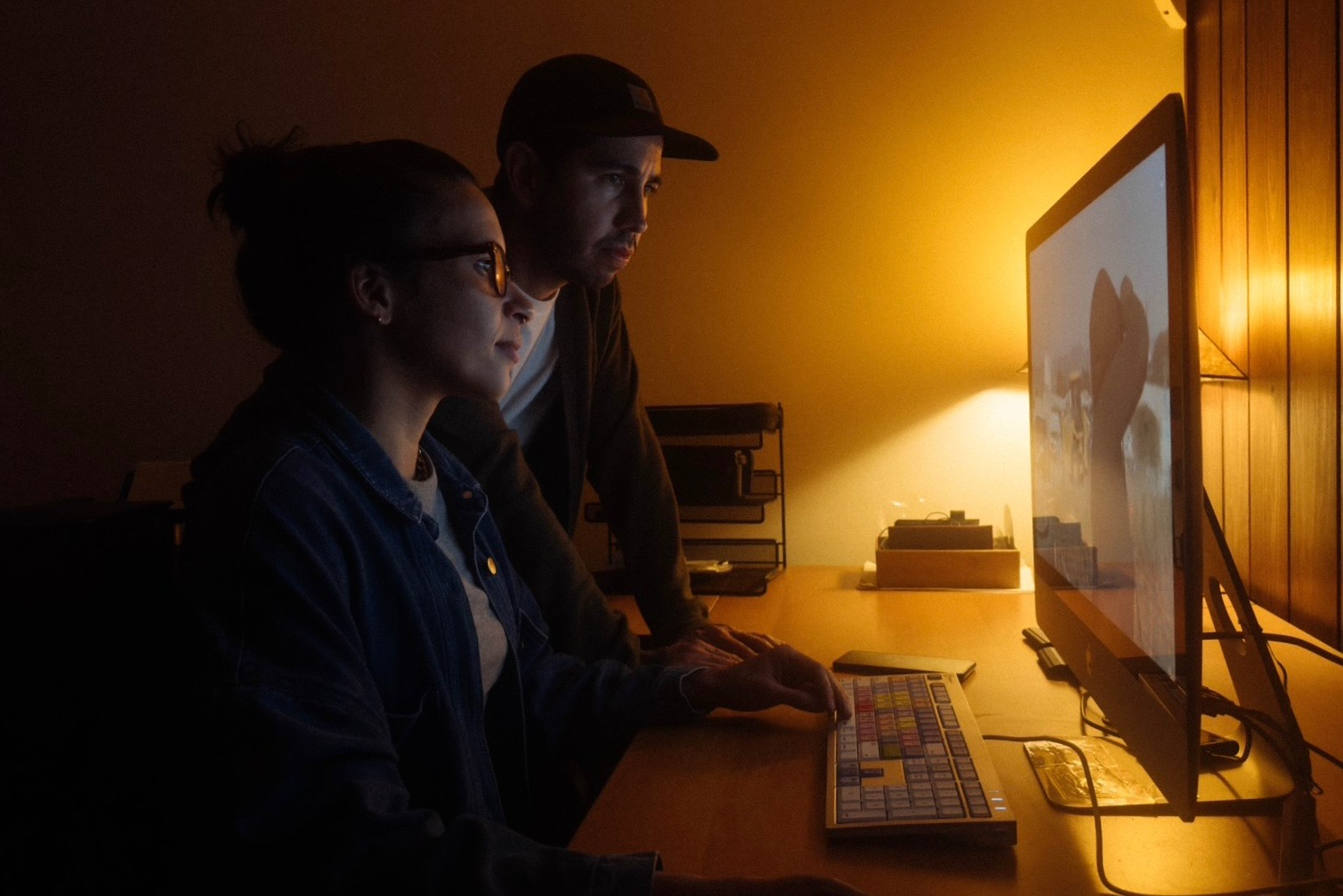
In this behind-the-scenes conversation, Peace is Loud’s Stephanie Palumbo and Florencia Varela discuss piloting a first-of-its-kind Post/Impact Residency with UFO centering care, imagination, and strategy in the documentary post-production process.
Peace is Loud: What inspired the creation of the Post/Impact Residency, and why was now the right time to launch it?
Florencia Varela: The origin of the program was a serendipitous function of having collaborated with Untitled Filmmaker Org (UFO) before, UFO having the infrastructure for a residency program in place, and Peace is Loud being invested in building innovative impact learning spaces for filmmakers. The specific launch date of the program was very much tied to the availability of the venue, which helped catalyze the program’s planning.
Peace is Loud: How did the collaboration with UFO evolve, and what made them the right partner?
Florencia Varela: UFO has been a partner of Peace is Loud for over a year and a half now, through our Collective Lens program. When they approached us with the idea to build a residency, they offered us the opportunity to be imaginative together and ask what it could mean to create protected space for impact planning. UFO brought immense value, from their previous experience delivering film residencies and access to a venue, to their commitment to a more equitable film ecosystem. When we learned about Wood Street, a film about an unhoused community trying to protect each other from eviction, and met with filmmakers Caron Creighton and Estevan Padilla, it ticked all the boxes.
Peace is Loud: Say more about the boxes Wood Street ticked. Why was this an ideal film for the impact residency?
Stephanie Palumbo: We really believe in the power of Wood Street, especially in this moment when encampment sweeps are threatening unhoused communities. This film is perfectly poised to be a catalyst for change and we felt strongly about its artistic merit and also the values and vision of the filmmakers.
Peace is Loud: What sets this residency apart from other film residencies?
Stephanie Palumbo: To our knowledge, there’s no other in-person documentary residency program where filmmakers get dedicated time, space, and strategic support specifically around impact work. Often filmmakers think of impact as a discrete, time-limited campaign, but we see it as ongoing and holistic work. Our residency allows impact to become a crucial part of the creative process.
Florencia Varela: This residency is the first of its kind that we know of. While many residencies are dedicated to films in development, and some impact programs exist virtually, we offered protected time and space to work on both the film and the impact strategy. The fact that we included financial, unrestricted support was also key. Fundraising for participant care work can be particularly difficult.
“Often filmmakers think of impact as a discrete, time-limited campaign, but we see it as ongoing and holistic work. Our residency allows impact to become a crucial part of the creative process.”
Peace is Loud: How did the residency integrate post-production and impact work?
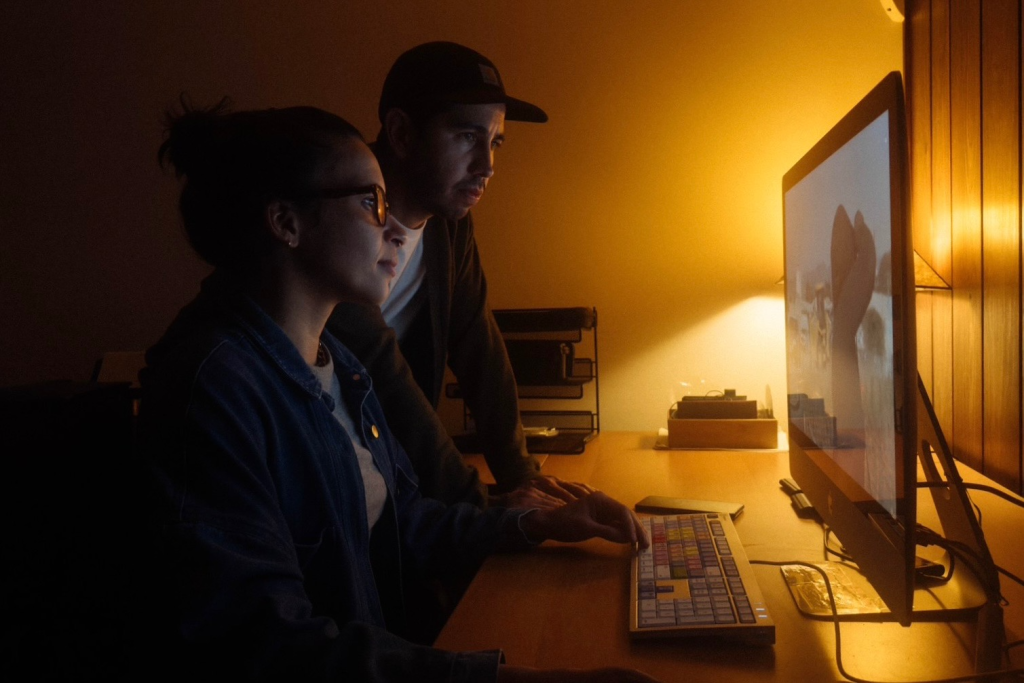
Stephanie Palumbo: Our partners at UFO provided a house with an editing suite for a month. We also brought in an editorial consultant, Rabab Haj Yahya, to view their cut and work with them in person. Flo and I met with the filmmakers to offer our Collective Lens impact frameworks, ask strategic questions, and identify impact and participant care next steps based on the deep knowledge and values Caron and Estevan shared. We also created impact principles and wrote fundraising materials by echoing back their own reflections. Everything is a draft that they can further edit and customize, but we hope it helps minimize the time and labor they’d otherwise spend on this while still finishing their film.
Florencia Varela: The core of the impact work was to create space for reflection and intentional questions around vision and care. Caron and Estevan were able to advance Wood Street from assembly to a rough cut, which is an immense achievement, using their impact principles as a decision-making lens in the edit. We were so energized by how much they shared with us.
Peace is Loud: How did you center care throughout the residency?
Stephanie Palumbo: We let the process be largely informed by the filmmakers’ needs, everything from deliverables to meeting schedules was determined through conversations with them. It was adaptable and responsive.Florencia Varela: An important aspect was financial accessibility. In addition to providing a $10,000 unrestricted grant, we made sure the program included stipends to help offset income or work disruptions, and we covered travel.
Peace is Loud: What specific needs did the residency seek to address?
Florencia Varela: Everything was rooted in Caron and Estevan’s vision and values. They advanced their project significantly, and it was exciting to be thought partners for the work.
Peace is Loud: What did you learn from this pilot that surprised or moved you?
Florencia Varela: A learning that I always love is that taking measured risks can be very rewarding. We are so grateful that this was an experiment we could embark on with UFO. Spending that much time in a learning space with a film team gave the program a depth that felt very right.
Stephanie Palumbo: I was very moved by the responses from applicants who expressed gratitude for this type of model. It makes me wonder how more organizations could provide deeper impact support like this.
Peace is Loud: Looking ahead, how do you see this residency evolving?
Florencia Varela: Given our experience with the pilot, I hope we can continue growing innovative learning spaces like the Post/Impact Residency, and keep building expansive (and financial!) support for values-aligned filmmakers. Ultimately, we want to help shift the industry so that impact and care are never afterthoughts.


